Stories that whisper into the heart. Thoughts untethered.
Finding inspiration in the small moments of life with Maris James
finally, at 40...
I'm learning to fall in love with who I am, who I am becoming, and also who I was.
I have a newfound grace for myself and a bit of pity as well, for who I was at 20.
I was a people pleaser. I didn't know how to take care of myself, how to advocate for myself, how to demand more for myself, demand better, demand my worth.
My 20s were a fucking shit show of being a people pleaser, being taken advantage of, and constantly not understanding the power of who I was, the power of my gifts, the power of my vision.
I look back on myself and say, “Wow, you were so fucking precious, too trusting, too naive, just too good for all the assholes that stole from you.”
I believed inherently that people were good, that they would give back as much as they took. Boy, was I wrong.
They just kept coming back for more and more and more.
I became the one they called when they needed something no one else would graciously give them, the one they called when they were in a pinch and needed inspiration, when they needed someone to talk them down or talk them up.
It was overwhelming.
I think because everyone thought I had it all figured out. They rarely checked in on the 23-year-old with two kids living on a simple teacher salary in a town I had just moved to.
I was so outwardly strong and confident and rarely anyone asked me how I felt. The queen of pouring into others and making them feel good didn't matter how I felt.
Acceptance from others became addictive. Like every addict, I was left feeling the emptiness, pain and loneliness. But through that, I became my own best friend, my own advocate.
I knew what it was like in my 20s to be surrounded by people, yet completely alone because people took such advantage of me.
They wanted my power in their lives. I spoke life into them, spoke truth into them, spoke healing. I saw the beauty in them, even when they couldn't see it for themselves. I adore how sweet you were, but in that there was a struggle.
There was the burden of constantly giving and rarely being given back into learning the hardships of not setting boundaries. Usually, my boundaries came at the most inconvenient times when I said yes to too much and ignored myself and the pain and disrespect of being stepped on all over again came raging out.
I promised myself I would do better when I looked into the eyes of my girls. I wanted them to understand their magic, understand their calling, understand their gifts, and most importantly, their worth.
But to protect them, I became a tougher mom. I wish I would have kept that softness I had, but in order to protect them from the world, I started to raise them the opposite of how I was, raised them to not give it all away.
I realized later in life that the world was going to kick the shit out of your loved ones every chance it got and the best thing I could do for them was to provide that place of safety, give loads of encouragement, and offer warmth and acceptance.
It's okay that you struggled in your 20s. You were a perfectionist, a people pleaser. In your 30s, you learned to be you. You learned to create. You learned to say no to what took to much, left you exhausted, didn’t care for you in return.
Now finally at 40, you look back and you realize simple truths about life and womanhood.
You learned that there's still time and there's still opportunity and yes, you've still got your magic.


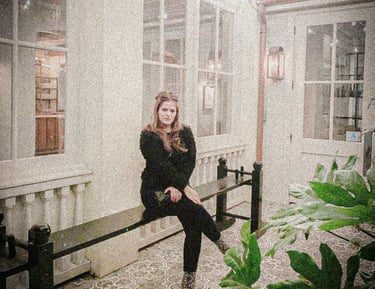




As I look at my children, I want to give them a future they know how to value. Not just a future that is comfortable or secure, but one that feels meaningful because they understand what it costs to build a life. I want to instill values that lead them toward gratitude, not entitlement and toward a confidence that comes from effort, responsibility, and knowing they earned their place in the world.
I will not take those feelings of worth from my daughter. Someday when she earns her degree and knows she put in the work to earn it. That ownership of her career will mean something to her because it was earned, not given.
We live in a world where there is very little sacredness left in earning your place. So much is given quickly, handed over without context or cost. And when something is simply given, it can just as easily be taken for granted, not out of malice, but out of unfamiliarity with what it required. What is at stake. What has been sacrificed to earn its place.
When you live with even just a pinch of excess, you begin to notice how the magic of material things disappears. What once felt special becomes ordinary. Value diminishes when effort is removed. Not because abundance is wrong, but because meaning asks something of us in return.
I want my children to learn the sacredness of impact.
The sacredness of work.
The sacredness of earning a dollar and understanding what it represents...time, effort, restraint, responsibility. I want them to know that when something costs you something, you treat it differently. You waste less. You pay attention. You honor it.
Work, when done with intention, is not punishment. It is formation. It teaches you what you can carry. It shows you what you are capable of becoming. The accomplishment is not just the outcome—it is the discipline, the showing up, the quiet endurance when no one is watching.
There is a holiness in earning. In understanding that dignity comes from participation, not entitlement.
That kind of pride cannot be purchased.
It cannot be given.
It can only be earned.
It is the becoming.
The Sacred Art of Earning
We live in a world that moves too fast to notice itself. Everything is available, replaceable, and endlessly upgraded, and somewhere in that speed we’ve begun to take nearly everything for granted…not just objects, but moments.
The small ones. The sacred ones. The kind that make a life feel worth living.
We rush past the preciousness of an ordinary breath. The warmth of sunlight on our skin. The quiet miracle of getting back up after a hard chapter of life.
We forget the pain of loss not because it has healed, but because we avoid the areas that remind us of the pain. Every day is a new opportunity, and yet our society is so fast-paced that time slips away unnoticed, carrying the most meaningful parts of living with it.
This is what a throwaway culture really costs us. Not just things, but reverence.
I used to teach strategy on how time could be leveraged, optimized, and multiplied. One day, it hit me with startling clarity: I was giving away the very thing I was telling others to protect. My time became more valuable than the revenue it was earning. I was sick of building wealth; I was trading my life for the opportunity to buy back small increments of it later.
The highest bidder won my time…and even though I tried hard, my time with the ones I loved was shorter than I wanted it to be.
That realization stopped me.
I didn’t need more money. I needed more time. Time with the people I love. Time to sit in the moments that often don’t produce anything measurable, but somehow produce everything that matters.
So I stepped out of the cycle. The cycle of work addiction. Of chasing accolades, goals, data, and the constant madness of building something for someone else’s definition of success. I didn’t stop working…I stopped consuming my own life. I chose to build a life I loved instead.
A throwaway society teaches us that when something wears down, you replace it. When it slows you down, you discard it. When it becomes inconvenient, you move on. When it is not profitable, you replace it with something that is.
We apply this logic to objects, to work, and eventually to ourselves. Nothing feels sacred when it can be replaced with the click of a button.
When everything is given, nothing is tended to. Nothing is repaired. Nothing is held with care.
I don’t want that inheritance for my children. I want them to deeply understand the value of their lives.
I want them to know the sacredness of time.
Of motherhood. Of sacred time with others. Of impact. Of connection.
Meaning doesn’t come from having more. It comes from staying. From noticing. From choosing presence over excess. From understanding that life isn’t something to rush through or replace when it becomes difficult.
We lose meaning when everything is given.
We find it again when we choose to slow down and build a life that we actually have time to live.
To be known and to know.
What is lost when everything is given


Quiet Inspiration
getting lost in the world in order to rediscover it